

Ciencia y Gestión
La investigación científica en Áreas Naturales Protegidas, en especial la investigación en temas prioritarios, es una herramienta fundamental para las y los tomadores de decisiones.
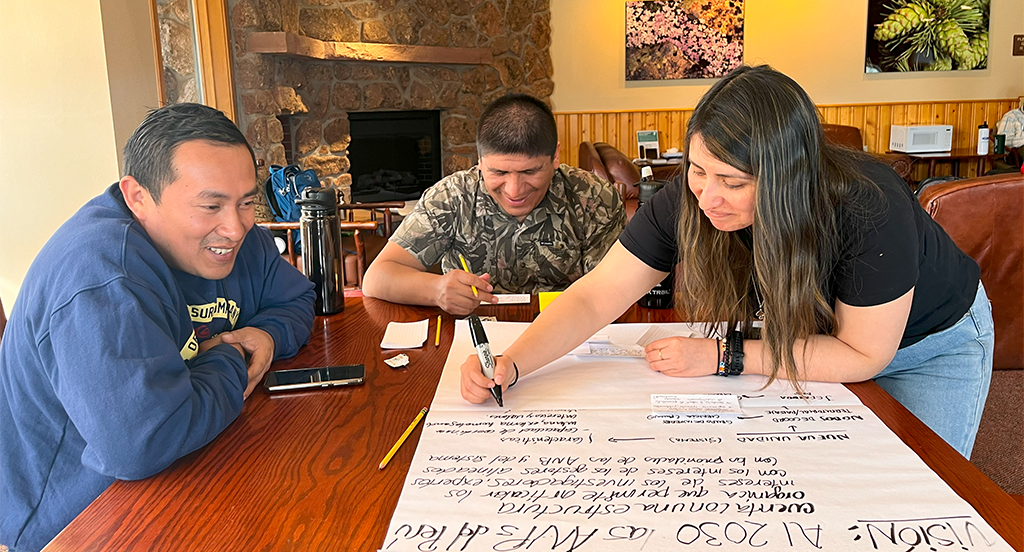
El Plan Director del Sistema de Áreas Naturales Protegidas (SINANPE) (2025) reconoce la investigación como una actividad inherente de la gestión de las Áreas Naturales Protegidas (ANP) y del SINANPE, ya que aporta información importante para la toma de decisiones. Este enfoque refleja un concepto fundamental compartido con sistemas de ANP en otros países: las áreas protegidas son fuentes de información de importancia para el bienestar del ser humano.
LA INVESTIGACIÓN CIENTÍFICA Y LA GESTIÓN EFECTIVA EN LAS ANP
Un aspecto clave que desarrolla el Sistema Nacional de Áreas Protegidas por el Estado (SINANPE) para alcanzar la gestión efectiva de las ANP es la identificación de prioridades de investigación. A partir de esto, su ente rector el Servicio Nacional de Áreas Naturales Protegidas por el Estado (SERNANP) desarrolla acciones de promoción mediante convenios con instituciones científicas y académicas, programas de voluntariado, el impulso de un fondo de becas para investigaciones científicas, y el establecimiento de grupos de interés de investigación científica en cada ANP.
Cabe señalar que, el método científico no es la única forma de investigación o fuente de información útil para la gestión de las ANP. Además del conocimiento científico, uno puede basarse en la historia, el conocimiento ancestral y las opiniones de expertos. Por ejemplo, inventarios de fauna, como los listados de aves realizados por aficionados en eventos como el Global Big Day, pueden ser valiosos si son validados por expertos.
OBSERVACIONES SOBRE DOS MUNDOS: LA CIENCIA Y LA GESTIÓN
Los tomadores de decisiones (gestores) y los científicos operan en mundos diferentes, pero igualmente importantes. Para mejorar su colaboración, es fundamental una comunicación empática basada en el entendimiento mutuo y la valorización del trabajo del otro. El investigador diseña estudios precisos, con datos cuantitativos y análisis estadísticos para garantizar alta confiabilidad. Por otro lado, el tomador de decisiones lidia con variables fluctuantes sociales, políticas y económicas que compiten con la ciencia en el proceso de decisión; necesitan información rápida (“para ayer”) y a menudo preliminar, sin poder esperar la publicación como un artículo científico.
Reserva Comunal El Sira
Créditos: SERNANP

Reserva Nacional Illescas
Créditos: SERNANP
LA CIENCIA Y LA GESTIÓN: DOS CICLOS VINCULADOS
El ciclo de gestión de las áreas naturales protegidas está compuesto por cuatro etapas, y el ciclo de la investigación científica, ha sido resumido en cuatro etapas. Ambos interactúan entre sí durante todo su proceso.

Ciclo de gestión
Planificación
Se definen los objetivos de gestión, indicadores, metas, así como las estrategias para cumplirlos, tomando en cuenta recursos humanos y financieros.
1
Implementación
Se lleva a cabo la ejecución de las actividades acorde a las estrategias planificadas.
2
Gestión
Retroalimentación y adaptación
Se realiza en base a la evaluación del monitoreo y demás información nueva, confiable y sistematizada.
3
Monitoreo y evaluación
Se realiza el procesamiento de información y cálculo de indicadores a diferente nivel, así como su confiabilidad y se genera la evaluación del monitoreo integrado.
4
Ciclo de la Investigación Científica
Identificación del Problema
Se definen los objetivos de gestión, indicadores, metas, así como las estrategias para cumplirlos, tomando en cuenta recursos humanos y financieros.
1
Establecimiento de Hipótesis
Definir preguntas específicas y diseño del estudio
2
Investigación
Escritura de Artículos
Diseminar los resultados y, si es preciso, reformular hipótesis.
3
Recolección y Análisis de Datos
Se realiza el procesamiento de información y cálculo de indicadores a diferente nivel, así como su confiabilidad y se genera la evaluación del monitoreo integrado.
4
Nota. Las siguientes etapas explican cómo ambos se necesitan en esta interacción y los conceptos que ambos deben de compartir.
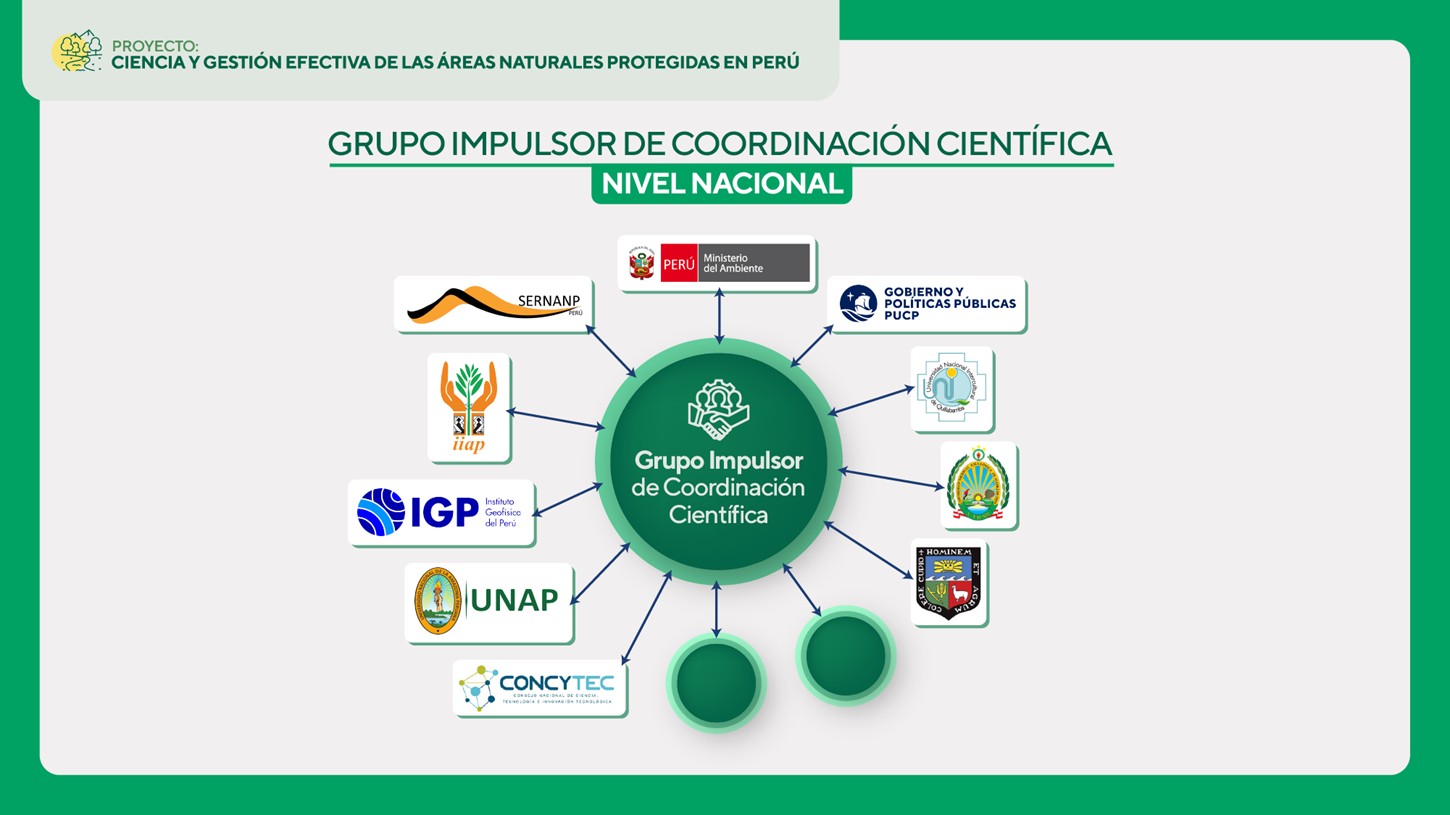
El Grupo Impulsor está compuesto de 10 instituciones que apoyan la coordinación de investigaciones prioritarias en común y da consejos al Proyecto sobre los procesos de coordinación científica en el Perú, vinculada a las áreas naturales protegidas. Su composición no está cerrada – se espera en el futuro agregar nuevos miembros al Grupo.
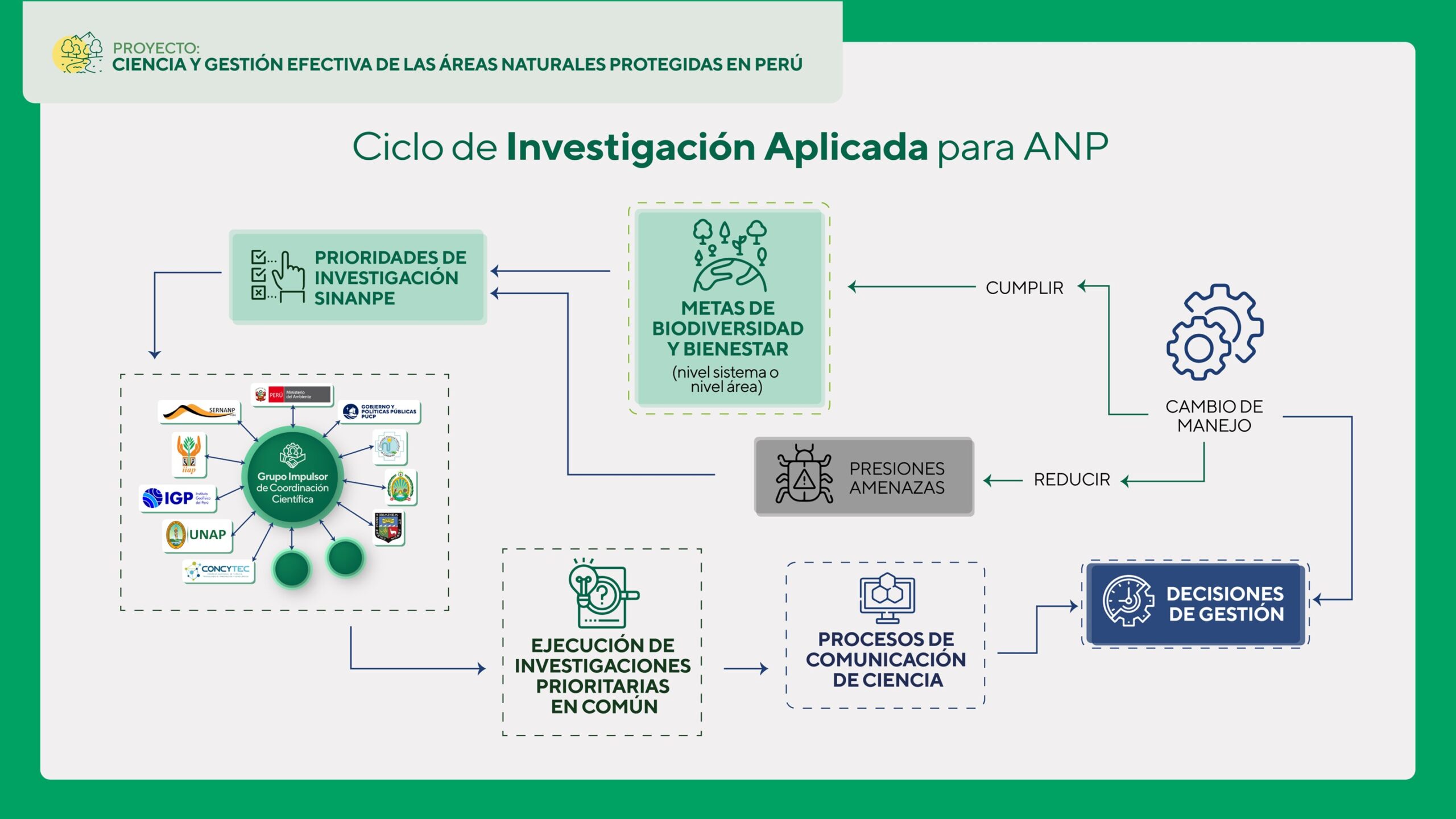
Este es un modelo conceptual que describe la interacción de la investigación (evidencia científica) y las decisiones de gestión de un ANP, resaltando la importancia de la coordinación entre actores. Conocimiento de las metas y las amenazas, o retos, ayuda a describir las prioridades de investigación del área, las cuales se ejecutan para producir y resumir información crítica para las decisiones de gestión de las ANP.
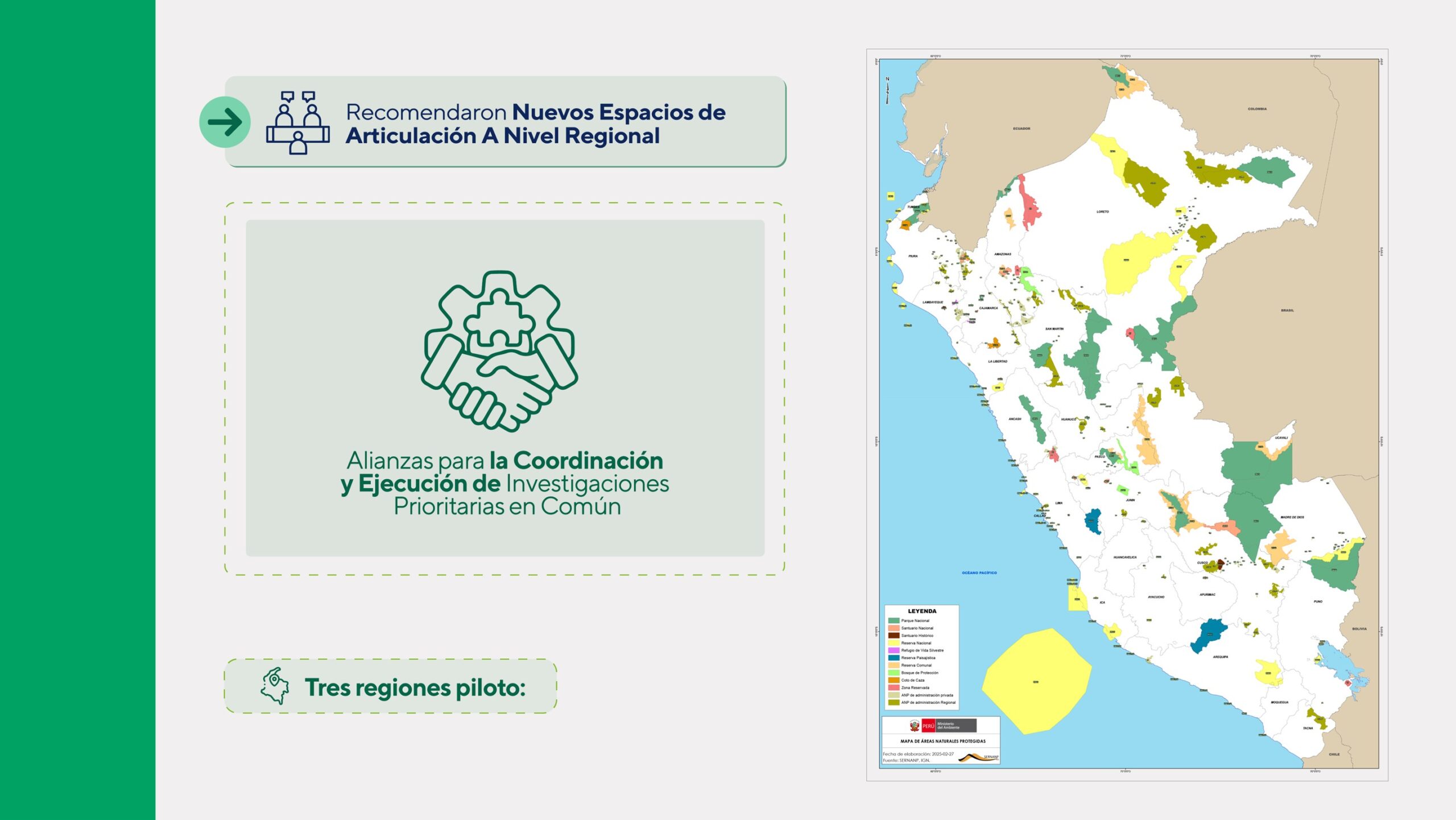
Una recomendación del Grupo Impulsor en 2024 fue trabajar en el desarrollo de Alianzas Regionales para la coordinación y ejecución de investigaciones prioritarias en común. El proyecto decidió comenzar en tres regiones: Loreto, Madre de Dios y Cusco.
En Resumen
La investigación científica en áreas naturales protegidas, en especial la investigación en temas prioritarios es una herramienta fundamental para los tomadores de decisiones. La investigación provee insumos durante todo el ciclo de gestión de las ANP, en apoyo a la conservación de la biodiversidad y la provisión de los servicios ecosistémicos que generan beneficios al ser humano. Aunque los y las investigadores y los y las tomadores de decisiones operan en “dos mundos diferentes”, la valorización del trabajo del otro, y la comunicación y diálogo frecuente, ayudan a encontrar las convergencias. Los tomadores de decisiones deben reconocer a los investigadores como actores estratégicos, y los investigadores deben sumirse más en la problemática de las ANP por medio de los Planes Maestros y los Grupos de Interés de Investigación. Ambos pueden aprender a describir sus ámbitos (“mundos”) utilizando un lenguaje claro y accesible, lo que promueve el entendimiento mutuo y fomenta un entorno de trabajo donde la información científica sea más abundante y oportuna.